How Alpaka Decides a Shift Is Accepted

Every time two clock readings are paired, Alpaka runs them through a fixed sequence of evidence checks, in order, until one accepts the pair.
Each stage answers two questions at once: what status does this shift need - Review, Complete or Issue - and how much of it gets paid. The first stage with real evidence wins; nothing further down the line is consulted once a match is found.
Three statuses come out of this. Complete means the shift is settled and payable as recorded. Issue means it is payable, but something about the shift isn't good enough based on the evidence (or lack of). Review means Alpaka thinks the staff member was on site much longer than expected.
A pair of readings is submitted. A start reading and an end reading, already matched into one record. Everything below is about judging this specific pair - not re-deciding whether the two readings belong together.
Guard - does this overlap another presence for the same person?
Checked before any evidence stage, and never overridden by a plausible-looking duration. If the person is already clocked into something else for any part of this window, this reading is the one disconnected - the earlier, standing presence will remain.
Guard - is this a night shift?
If the start and end straddle midnight then this is a night shift, and if the staff member has evidence of working nights then it can be accepted - if they don't, then it's a bad pair - they are automatically separated.
Schedule match
Is there a real, dated rota entry for this person whose start and end fall close to this reading's own clock times? This is the strongest evidence stage - someone was actually scheduled for this.
Status is set from how close each edge lands to the scheduled time, not simply "matched = Complete." Duration is the scheduled span, adjusted for any real lateness or early leaving.
Shift pattern match
No dated rota entry, but this person has a recurring shift pattern - the same days and hours on rotation. The same proximity check runs against the pattern's times instead.
Weaker than a real rota entry, since nobody actually rostered this specific day.
Historical pattern match
No rota, no shift pattern. Alpaka looks back over this person's recent history for a completed reading on the same weekday, at a similar time. "They usually clock in around this time on a Wednesday" - a real but weaker signal, since nobody decided this shift should happen, it just usually does.
The duration rule is strict: this reading's actual worked duration is compared against that historical shift's payable duration.
Configured shift match
Nothing above matched. Alpaka scans the shifts configured across the business, not just the ones this person is assigned to, for one whose shape this clocking plausibly fits - arriving somewhat early is fine, arriving late or leaving early is not.
This stage exists for the bound, not the match. Duration comes from a real configured shift rather than raw clocked time - that is the whole value of running it. But nobody decided this shift should happen, so it can't be set as Complete.
No match found - every stage passed with nothing to go on
No rota, no shift pattern, no historical match, no plausible configured shift. The pair is real - both edges were physically clocked - but entirely unevidenced.
Two Records, Same Readings
Edith clocks in at 07:58 on Wednesday and out at 16:12.
She is rostered 08:00 to 16:00. Stage 1 finds that rota entry. Both edges land inside tolerance, so the shift is Complete and the scheduled eight hours are paid. The twelve minutes after 16:00 are not paid - the rota is what was agreed, and staying late is not the same as being asked to.
Now take the same two readings with no rota entry and no shift pattern behind them. Stages 1 to 3 find nothing. Stage 4 finds a configured shift in the business that fits the shape - an 08:00 start, a 16:00 finish, arriving slightly early and leaving slightly late. The record is settled as an Issue, and the duration comes from that shift, not from the raw clocked time.
Identical readings, identical hours on the clock, different status. Nobody rostered the second one, so Alpaka will not call it Complete.
What Happens Next
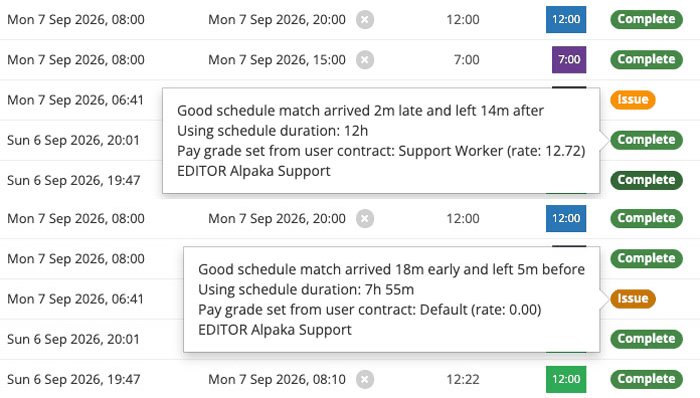
An Issue or Review is not a rejection. The hours can be paid; the record simply carries a note saying which evidence stage settled it and why. A manager clears Issues from the report, and either accepts the record as it stands or corrects it.
The reason this matters beyond payroll is the trail. When a shift is questioned months later - by an auditor, manager or a member of staff - the record already says which stage settled it and on what evidence, and it says the same thing it said on the day. A system that quietly resolves every thin record in the employer's favour has nothing to show when somebody asks.
This is also why no AI is involved in the decision. The logic is fixed and repeatable: the same circumstances produce the same outcome today, next month and next year. Nothing is interpreted, so nothing can lean toward the employer or the employee. The record states the circumstances and the result, and that is all it does.
Tolerances are configured per business. The defaults are below.
How "On Time" Is Actually Measured
Arrival (start edge)
Departure (end edge)
Status Summary, For Quick Reference
The Short Version
A rostered shift that was actually clocked as planned is paid in full. A recognised pattern, a recent habit, or a plausible shift shape each carry progressively less weight, and Alpaka is honest about that difference in the status it assigns, not just the hours it pays.
Nothing is ever silently assumed to be fine. Where the evidence is thin, the record says so, and a person gets the chance to look at it - which is a better guarantee for your staff, and a better audit trail for you, than a system that always resolves in the manager's favour.
Three ways to get started
Try it yourself
A 5-minute guided walkthrough of Alpaka, no setup required, no data. Best if you'd rather get hands-on before talking to anyone.
Book a live demo
Talk it through with a solution specialist - not a salesperson. Ideal if you've got specific questions or want to see how Alpaka fits your setup.
Sign up free
Start right away - no credit card, no setup fees. The quickest route if you already know what you're after.
